Sales Meeting Entertainment: What Actually Works for a Sales Team
Quick Answer
The best sales meeting entertainment is interactive, short, and placed where the agenda sags. Salespeople are social, competitive and skeptical, so they respond to something they can take part in rather than sit through. The three slots that matter are the afternoon slump after lunch, the awards dinner, and the welcome reception. Keep a set inside the agenda to about 30 minutes, and book a January or February kickoff in the fall.
Key Takeaways
- A sales team is social, competitive, and quick to spot anything that feels like forced fun.
- Interactive beats inspirational. By day two they have heard enough speeches.
- Put entertainment where energy drops: after lunch, at the awards dinner, or at the opening reception.
- Thirty minutes is usually right for a slot inside the agenda.
- Mind reading lands especially well, because reading people is their job.
- Most kickoffs are in January or February, so the booking happens in the fall.
I spent my career as a software engineer in Silicon Valley before I did this full time. So I have been the guy in row six checking his laptop during the afternoon session.
I know exactly what a meeting room looks like when it has stopped listening. The slides keep coming, the coffee has worn off, and half the room is answering email under the table. Nobody is being rude. They have run out of attention, and no amount of good content gets it back.
That is the moment good sales meeting entertainment is built for. Not a break from the meeting, but the thing that gets the room back so the rest of it works. Here is what I have learned in fifteen years and more than a hundred corporate events, for companies like Salesforce, Adobe, Cisco and Genentech.
Salespeople Are a Very Particular Audience
A sales team is not the same crowd as an all-hands or a corporate retreat, and three things set it apart.
They are social. They talk for a living, and would rather be in the middle of something than watch it from the back.
They are competitive. Put a challenge in front of them and they lean in, because not getting it is not an option.
And they are skeptical. They can smell a pitch from across the room, because they give one every day. Anything that feels like forced fun loses them in ninety seconds.
"You can't fool a room full of salespeople. You can amaze them, though."
Which is why interactive entertainment works so well here. It gives them something to do, something to figure out, and something to talk about at the bar afterward.
Where Entertainment Fits in a Sales Meeting Agenda
The question is rarely whether you need entertainment. It is where to put it, and three slots do most of the work.
The three slots that matter
1
The afternoon slump
Energy is at its lowest and the afternoon sessions still have to land. A short, funny, interactive set here resets the room for everything that follows.
2
The awards dinner
Put the show after the awards, not before, so it turns a formal evening back into a party instead of warming up for a list of names.
3
The welcome reception
Drinks in hand, regions and new hires who have never met. Walk-around magic moves group to group and gets people talking outside their own team.
If you only have budget for one, pick the slot where your meeting is most likely to lose people. Usually that is the afternoon after lunch, and there are ways to make it work on a limited entertainment budget.
The awards dinner follows the same thinking as any annual company celebration. The reception is a different job, and that comes down to close-up magic versus a stage show.
Why Interactive Beats Inspirational
The default choice is a motivational speaker, and there is a place for that. But look at the agenda from the seats.
Sound familiar?
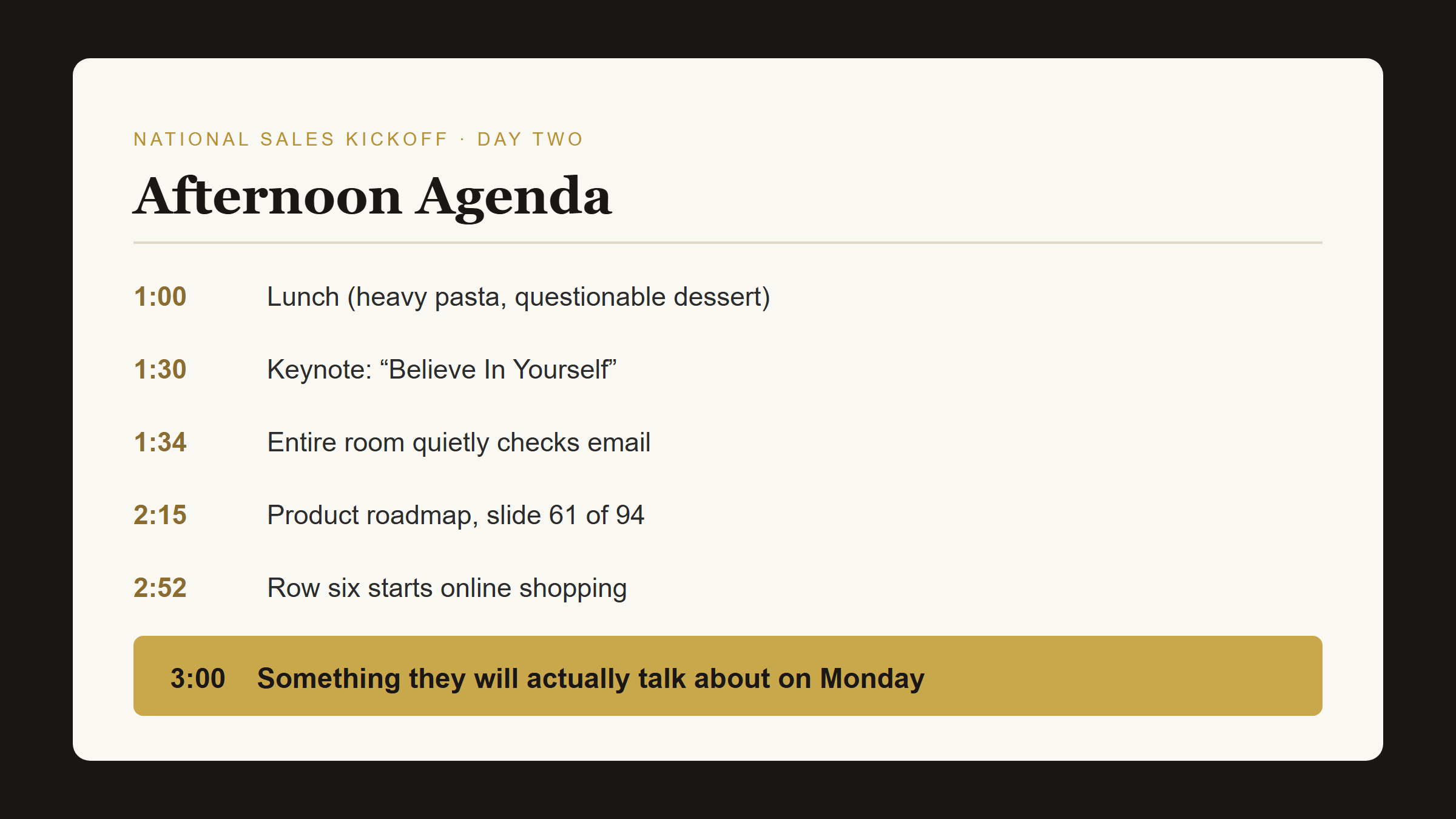
Day two of the kickoff. The CEO spoke this morning, the head of sales spoke after that, and there was a product roadmap and a keynote about resilience. It is 1:30, lunch was heavy, and the next thing on the agenda is another person at a podium telling the room to believe in themselves. The room is polite. The room is also checking its phones.
By then the audience has had plenty of talking. What they have not had is a chance to take part.
Interactive entertainment changes the room's job. Instead of listening, people are volunteering, guessing, reacting, and daring the person next to them to go up. A room that has just laughed together and watched a colleague experience something impossible is awake again, and it has a shared story the team will still be telling on the next call.
Why Mind Reading Lands With a Sales Team
Of everything I do, mentalism is the part sales audiences love most, and I think I know why. Reading people is their job. Every good salesperson is working out what the person across the table is really thinking, so when somebody appears to do that for real, with their own colleague, they take it personally and want to know how.
It is also clean in the way a corporate room needs. Nobody gets embarrassed, and the volunteer is the hero of the moment, which is how their teammates will describe it later. There is video on my corporate mentalist and magician page.
How Long, and What to Ask For
Keep the general session set short
For a slot inside the meeting itself, about 30 minutes is right. Long enough to build real moments, short enough that it never competes with the content people flew in for. At an evening event, a 45-minute show works well.
Sort out AV before the week of the meeting
Most sales meetings are in hotels with an AV team on site, so this is simple if you ask early. For a stage set the usual list is a wireless lapel or headset microphone, a handheld microphone for volunteers so the room hears what they say, and a way to play recorded music through the house system. That last one is most often left off the AV order, and it matters more than it sounds. If the dinner has a DJ, the sound is already there.
Tell the performer about the room
Ask whoever you hire what they need to know about your team. Regions, a big win, a product name everyone knows. Nothing that singles anyone out, just enough that the material feels made for your people. If they do not ask, that tells you something, and it is the main reason an off-the-shelf act is the wrong choice for a room like this.
When to Book Sales Kickoff Entertainment
Most sales kickoffs happen in January or February, at the start of the fiscal year, so the planning happens in the fall and so does the booking. Once the holidays are over, venues, speakers and entertainers are committed. Three to five months ahead is comfortable.
Closer to the date, reach out anyway. Dates do open up. And if you are also planning a corporate holiday party, book both in the same conversation, because December dates go even earlier. There is also a longer look at corporate event entertainment ideas that actually work.
Planning a Sales Kickoff?
Let's Find the Right Slot for Your Team
Comedy magic and mind reading for sales meetings, kickoffs and awards dinners across the San Francisco Bay Area and Northern California.
Frequently Asked Questions
What is good entertainment for a sales meeting?
Something interactive, short, and clean. Salespeople are social and competitive, so entertainment they can take part in, like comedy magic and mind reading with volunteers from the team, holds their attention far better than another speech.
When should entertainment happen during a sales kickoff?
The strongest slots are right after lunch when energy drops, at the awards dinner after the awards are handed out, and at the welcome reception on the first night. If you can only choose one, choose the afternoon slump.
How long should a sales meeting entertainment set be?
About 30 minutes for a slot inside the meeting agenda. For an evening dinner or party without agenda pressure, a 45-minute show works well. Walk-around magic at a reception usually runs one or two hours.
Is a mentalist appropriate for a corporate sales audience?
Yes, and it is often the favorite. Reading people is a salesperson's everyday skill, so mind reading feels personal to them. A good corporate mentalist keeps it clean and makes the volunteer look great, so nobody is embarrassed.
How far ahead should we book entertainment for a January sales kickoff?
In the fall. Three to five months ahead is comfortable. Once the holidays arrive, most entertainers and venues are already committed for January and February.