
Planning a Bay Area Company Holiday Party? Start With the Room
Quick Answer
Plan a Bay Area company holiday party by starting with the room, not the act. Four things decide what entertainment will work: how many people you actually expect, whether they are standing or seated, whether there is a program, and what kind of space you are in. Standing receptions need walk-around entertainment; a room already set for awards can carry a stage show. Never place the dance floor between the stage and your guests. Bay Area companies book December dates in September and October, and by November the good Fridays and Saturdays are gone.
Key Takeaways
- The room decides more than the act does. The same performer lands completely differently in two different spaces.
- Standing cocktail parties need walk-around entertainment. A stage show fights that room and loses.
- At a seated dinner, sightlines are everything. A low riser is a small cost that changes the whole result.
- If there is a raffle, run the show before it. The raffle is what keeps the room full to the end.
- Never put the dance floor between the stage and your guests. It kills the closeness the night depends on.
- Bay Area companies lock in December dates in September and October. November leaves you choosing from what is left.
You can tell within about ten minutes whether a company holiday party is going to work.
It is not the food, or the venue, and it is definitely not the budget. It is whether people are talking to someone they do not normally talk to. A great company party is one where the guy from finance ends up in a real conversation with somebody from engineering, and on Monday they say hello in the hallway for the first time in two years.
I have spent fifteen years doing over a hundred corporate events, a lot of them in December, for companies like Adobe, Salesforce, Genentech and Kaiser Permanente. The most common thing I see is a planner who picks the entertainment first and then tries to make the room fit it.
It works much better the other way around.
The Room Decides More Than the Act Does
The same performer, the same material, the same night, will land completely differently in two different rooms. Three hundred people standing with drinks in a ballroom is not the same job as sixty people seated at round tables.
Answer these before you look at a single act
1
How many people, honestly
Not the invite list. The number you actually expect through the door. Everything else follows from this one.
2
Standing or seated
This changes everything. A standing crowd and a seated crowd need two different kinds of entertainment, not two versions of the same one.
3
Is there a program
Awards, a CEO speech, a raffle. Anything that means people face one direction and the room is already built for a stage.
4
What is the room
Hotel ballroom, restaurant, your own office, a winery out in Livermore. Each one behaves differently once it fills with people.
Answer those four and the right kind of entertainment usually picks itself.
The Three Shapes a Company Party Takes
The mingle
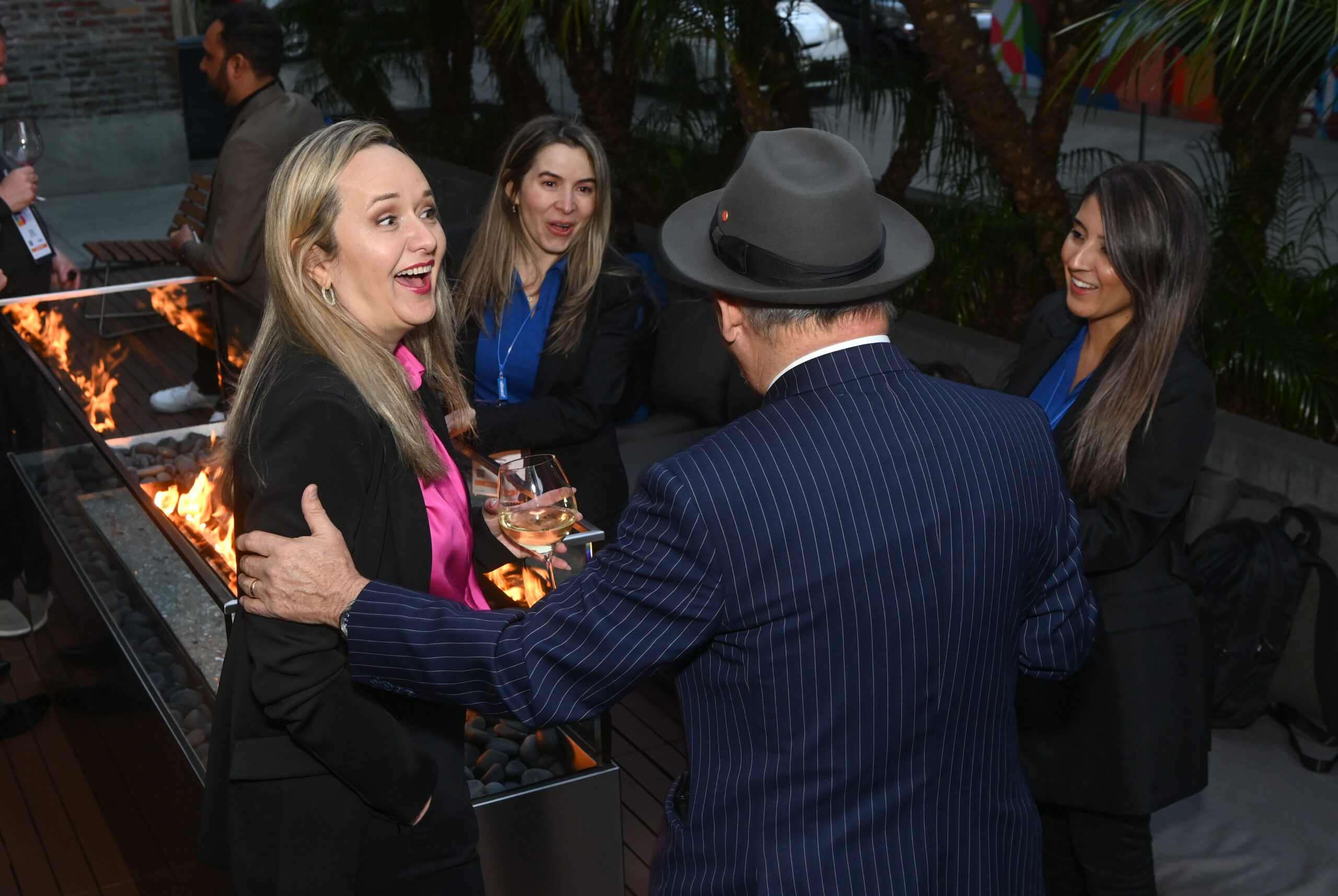
Cocktails, standing, people drifting. No program, or a very short one. This is the most common shape a company party takes, and the hardest one to entertain, because there is no moment where everyone is paying attention at once.
What works here is walk-around entertainment. Something that goes to small groups of six or eight, does five minutes, gets a reaction, and moves on. It fixes the exact problem this shape has, which is people standing in the same three clumps they arrived in. A group that just watched something impossible together starts talking to each other.
What does not work is a stage show. You will spend twenty minutes getting three hundred people to face the same way, and by then the energy is gone.
The seated dinner
Everyone at tables, courses coming out. Friendlier than it looks, because you have built-in moments. Between courses, people are captive and slightly bored.
Walk-around works beautifully here, table by table. A short stage set works too, but everything depends on whether every guest can actually see. A show half the room is craning their neck at is a different show, and not a better one.
If the floor is flat and the tables run deep, get a low riser. It is a small line item, often something the venue already has in a cupboard, and it is the difference between a show people watched and a show people talk about. Ask before the room is set.
The program
Awards, recognition, a CEO who wants to say something. People seated and facing forward, a stage, a microphone, someone running the AV.
This is the one shape where a proper stage set earns its keep, because the room is already built for it. The trick is where you put it. After the awards, not before. Put it before and you are the warm-up act for a spreadsheet. Put it after and you are the thing that turns a formal evening back into a party.
And if there is a raffle, put the show before it. A raffle is the best crowd-holder there is, because nobody walks out of a room where their ticket might still get called. Awards, then the show, then the raffle, and the room stays full to the end of the night.
The Dance Floor of Death
If there is dancing, do not put the dance floor between the stage and your guests.
I am serious about this one. It is the most common room mistake I see, and the most expensive.
Sound familiar?
Three hundred people, a hotel ballroom, and a dance floor the size of a tennis court sitting empty between the stage and the nearest table. The show starts. The front row is forty feet away. Nobody at the back can hear anyone else react, so nobody is sure whether it is going well. An hour later the dancing finally starts, and by then half the room has drifted to the bar. Nothing was wrong with the act. Everything was wrong with the room.
During the show the dance floor is empty, because nobody is dancing yet. So you have twenty feet of shiny nothing between the performer and the nearest table. Everyone gets pushed back, and the people who should be your front row are marooned in the middle of the room. The intimacy goes, and with it the thing that makes the night work, which is the feeling that this is happening to you rather than at you.
Close and tight is always better. A room where the front table is near enough to reach out and touch something laughs harder and gasps louder, and that spreads backward through everyone else.
"There is a reason we call it the Dance Floor of Death."
The fix costs nothing. Put the dancing off to one side and keep the tables tight to wherever the show is happening. Most venues will do it happily if you ask before the room is set.
The Sound Question, and Why I Ask It First
When someone asks whether I can provide sound, my first question back is always the same. Are you having a DJ?
It sounds like a dodge. It is the fastest way to find out whether the room already has what it needs. If you have a DJ or a band, you almost certainly have a microphone, speakers, and somebody who knows how to run them. Problem solved at no extra cost.
If you do not, and you expect more than about fifty people to hear someone speak, somebody has to bring sound. That is a real line item, and far cheaper to know about in August than in the third week of December. Most venues can provide it, so ask early, because their AV desk gets busy.
And if you are doing a standing cocktail party with walk-around entertainment, you may not need sound at all. Worth finding out before you rent some.
When Bay Area Companies Actually Book
Every year I watch the same pattern. A few well-organized companies lock in their December date in August. The main wave comes through in September and October. Then there is a scramble in early November from companies who assumed there was more time.
The scramble is expensive. Not because performers raise their prices, but because the good Fridays and Saturdays in December are simply gone. There are about four of each in the whole month and every company in the Bay Area wants them.
Reading this in August or September, you have the pick of the calendar. Reading it in November, call anyway, because dates do open up. Just move quickly. There is more on holiday party entertainment and how the season runs.
Don't Just Book an Act. Change the Room.
You are not buying a magic show. You are buying a change in the room.
The test I use, and the one I would use if I were you, is simple. On Monday, are people still talking about it? Not politely. Actually talking about it, to someone who was not there.
Ask whoever you are considering how they would handle your specific room. Not their standard show. Your room, your number of people, your shape. If they cannot answer that, they have not thought about it, and it will show on the night. That is as true of corporate event entertainment generally as it is of a holiday party.
Planning a December Party?
Let's Talk Through Your Room
Comedy magic and mentalism built around your space, your headcount, and the shape of your night. Serving the San Francisco Bay Area, Silicon Valley, and Sacramento.
Frequently Asked Questions
How far in advance should we book entertainment for a Bay Area company holiday party?
For a December date in the Bay Area, September is comfortable and October is fine. November works, but your choice of dates narrows sharply. There are only about four Fridays and four Saturdays in December, and those go first.
How many guests is too many for walk-around entertainment?
There is no hard ceiling. It becomes a question of coverage, and the answer depends on how long the reception runs and how many groups need reaching. Any performer worth hiring will do that math with you rather than just saying yes.
Can we hold our company holiday party in our own office?
Often it works better than a hotel. People are relaxed, the acoustics usually suit close-up work, and you are not fighting a ballroom. Check the lighting, and check there is somewhere for people to put their drinks down.
Where should the dance floor go at a company holiday party?
Off to one side, never between the stage and the guests. An empty dance floor in front of the performance area pushes every table backward and destroys the closeness a show depends on. Keep the tables tight to wherever the show happens, and ask the venue before the room is set.
Do we need a stage for a corporate holiday party show?
For walk-around entertainment, no. For a stage set, what you need is sightlines, which usually means a low riser or a room where the floor works in your favor. Most venues have a riser available and it is a small line item.